
Key Takeaways:
- Wake surfing is easier to learn than most people expect, with many beginners riding without the rope during their first session.
- The biggest challenges are getting up on the board and finding the wake pocket, both of which improve quickly with practice.
- Having the right boat, equipment, and wave setup makes a huge difference in the learning experience.
Who It’s For:
- People interested in trying wake surfing for the first time.
- Families looking for a fun and beginner-friendly water activity.
- Anyone comparing wake surfing to wakeboarding or traditional surfing before choosing a sport to learn.
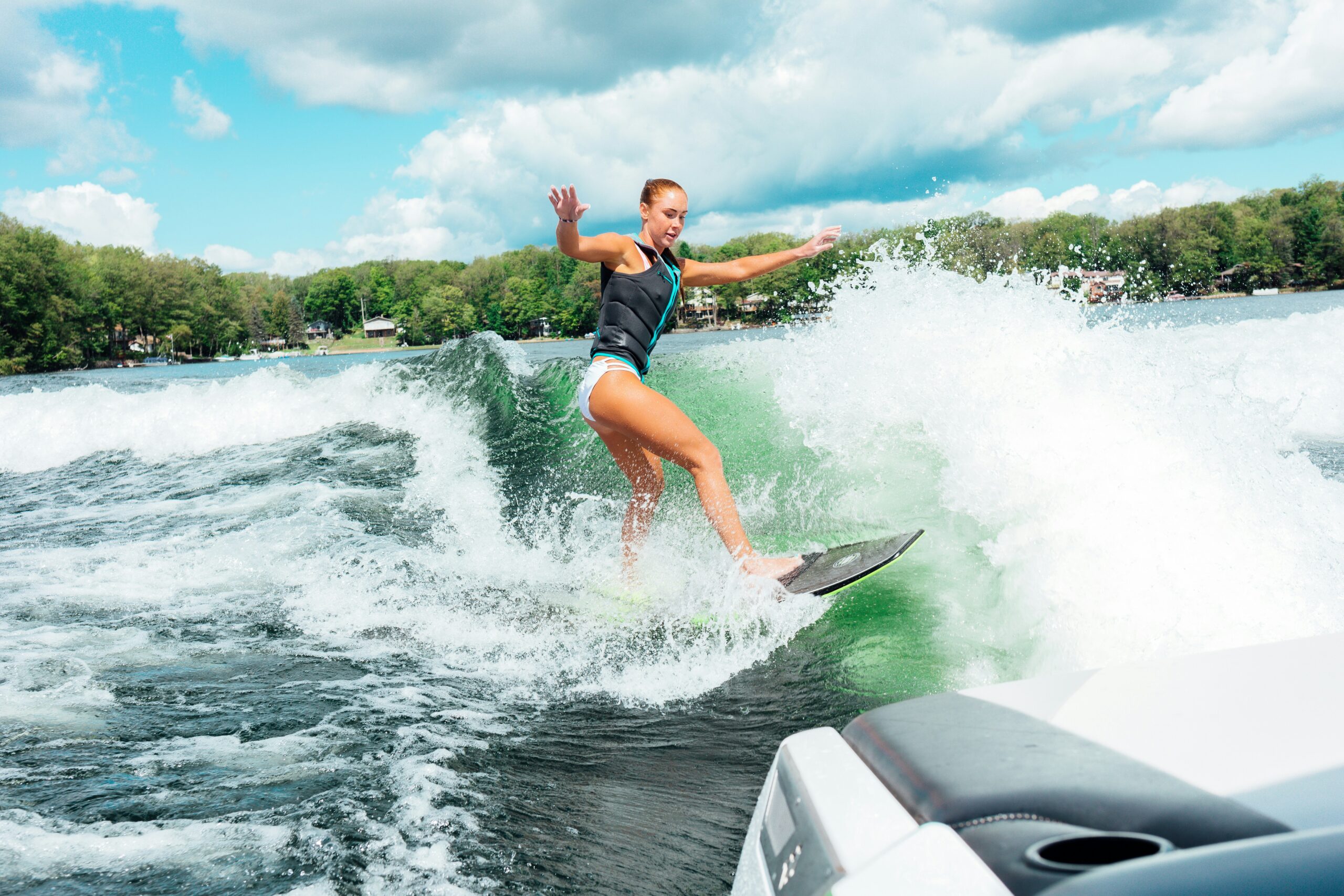
Wake surfing is easier than most people expect. The boat’s wake moves at 9 to 12 mph, the wakesurf board is large and stable, and the wave does most of the work for you. Most beginners are riding hands-free within their first session.
The comparison people make to ocean surfing is what creates the confusion. Real surfing requires you to paddle into an ocean wave, pop up fast, and balance on a moving face that disappears in seconds. Wake surfing is different at every step. The wave is constant, the speed is slow, and you start with a wakesurf rope to get your footing before letting go. Once you understand how the sport actually works, the learning curve flattens out quickly.
How a Boat’s Wake Creates the Wave
The wave you ride while wake surfing comes from the boat’s displacement in the water. A wakeboard boat designed for the sport uses a ballast system, which fills heavy tanks with water to weigh down the back corner of the boat. More weight means more displacement, which creates a bigger, cleaner, more consistent wake.
This is why wake surfing only works behind an inboard surf boat. Neither will a pontoon, a fishing boat, or anything else that wasn’t designed for it. The boat matters more than most people realize.
The Moomba Max, which Surf This rents, carries 3,000 lbs of ballast and runs an Autowake 3.0 system. Autowake automatically shapes the wake based on the rider’s profile. For a beginner, it creates a softer, more forgiving wave. For advanced riders, it can dial up something bigger. You don’t need to understand the settings to benefit from them.
What Makes Wake Surfing Hard
Getting Up the First Time
The hardest part of wake surfing is the first 10 seconds. You start in the water on your back, feet on the board, rope in hand. The boat idles forward until the rope goes taut, then accelerates. Your job is to let the boat pull you up to standing without fighting it.
Most first-timers try to muscle their way up. The instinct is to pull on the rope or stand up fast. Both of those things cause falls. The technique is to keep your knees bent, your arms relaxed, and let the boat do the work. When the pull comes, resist the urge to rush it. Let it bring you up.
It usually takes a few tries. Falls are soft at this speed. The water is warm. The boat slows down immediately. Getting up is a skill, and most people figure it out within the first 20 minutes.
Finding the Wake Pocket
Once you’re standing, the next challenge is positioning. The wake pocket is the area directly behind the boat where the wave has the most push. Too far back and you lose momentum. Too far forward and the wave runs over you.
The rope is how you navigate this at first. Move toward the boat (pull yourself in on the rope) to feel more push from the wave. Ease back to feel less. When you find the spot where the board feels like it’s being pushed without effort, you’re in the pocket.
Most people hold the rope longer than they need to. That’s fine. When the wave is clearly pushing you forward, and the rope is slack, that’s when you let go. The first time you release and realize you’re riding the wave completely on your own is the moment that defines wake surfing for most beginners. It usually happens within the first hour.
Weight and Body Position
Weight distribution on a wakesurf board is less forgiving than it looks. Too much weight on your front foot and you’ll nose-dive or lose speed. Too much on your back foot and you’ll stall out.
The correct position puts slightly more weight on your back foot, with your front foot steering and your knees bent. Staying low lowers your center of gravity and makes the ride more stable. Standing tall feels natural, but makes you easier to knock off balance.
What Makes Wake Surfing Easy
The Slow Speed
Wake surfing happens at 9 to 12 mph. Compare that to wakeboarding, which runs closer to 20 to 23 mph, or water skiing, which can push past 30. At 10 mph, falls don’t hurt. You don’t skip across the water. You just sink into it.
The slow speed is also why this sport is accessible to kids and to people who have never tried any water sports. The barrier to entry isn’t physical. It’s technical, and the technique is learnable quickly.
No Paddling
Ocean surfers spend the majority of their time in the water paddling. They paddle out past the break, paddle to catch waves, paddle back after falling. It’s exhausting before a ride ever happens.
Wake surfing skips all of that. The wakesurf rope gets you up, the boat’s wake does the work, and you ride until you fall or the tank runs empty. You don’t need surfing experience. You don’t need to know how to paddle or read a break or time a set. The wave is just there, constant, waiting for you to find the pocket.
The Right Gear Handles the Rest
A proper wakesurf board is nothing like a surfboard used in the ocean. It’s wider, shorter, and built for low-speed riding behind a boat. Beginner-friendly boards are designed with more surface area for stability and forgiveness. You don’t need to start on a performance board built for advanced tricks.
The right gear removes friction from the learning process. Show up to the right boat with the right board, and the sport teaches itself faster than almost any other water sport.
Start Wakesurfing: What to Do Before You Get in the Water
Pick the Right Boat
Wake surfing requires a purpose-built inboard surf boat with a ballast system. Renting from a company that has the right equipment is step one. Everything downstream depends on it.
Tell the Driver Your Skill Level
The Moomba Max’s Autowake system can be adjusted on the fly. If the wave feels too big, the driver can reshape it. If it feels too small, same. Communication between the rider and driver makes a bigger difference on the first day than any other variable.
Let the boat know you’re a beginner before you get in the water. The wave profile will be set accordingly.
Get a Full Walkthrough
Before you leave the dock, ask for a walkthrough of the controls, the Autowake settings, and the procedure for getting up. A 10-minute orientation at the start saves significant confusion once you’re on the water.
The Right Gear for Wake Surfing
Wakesurf Board
Beginner riders should use a larger, more buoyant board with a wider shape. These boards are stable at slow speeds and forgiving when your weight shifts. Performance boards and smaller boards built for advanced tricks are designed for experienced riders who already know how to control their position in the wave.
If you’re renting from Surf This, the right gear is already handled. The board included with the rental is selected for the conditions and rider profile.
Wakesurf Rope
The wakesurf rope is shorter and thicker than a wakeboard rope. It’s only used to get up and to pull yourself back into the pocket if you drift back. Once you’re riding, it hangs loose. Most people are surprised by how short and light it is compared to what they expected.
What to Wear
A swimsuit and a life jacket are the basics. In the morning on Utah’s high-elevation lakes, the air can be cool even in July. A wetsuit top or a light rash guard makes the first hour more comfortable, especially if you’re falling and getting back in the water repeatedly.
Wake Surfing vs. Wake Boarding: What’s the Difference
Both water sports happen behind a boat. The similarities stop there.
Wakeboarding involves being pulled at higher speeds on a board with bindings that lock your feet in place. You stay connected to the rope the entire ride. The speed is faster, the impacts harder, the skill floor higher.
Wake surfing runs at roughly half the speed with no foot bindings. The rope is only temporary. You ride detached from the boat in the curl of the wave. It’s a fundamentally different experience.
For beginners and families, wake surfing is the more accessible option. For riders who want airtime and want to build toward advanced tricks off the wake, wakeboarding has a different ceiling. The two sports appeal to different things.
Is Wakesurfing Hard for Kids?
No. Kids often learn faster than adults because they’re closer to the ground, lighter, and less likely to overthink the technique. The slow speed means falls are soft. The board provides plenty of stability for younger riders.
The main consideration for kids is board size and wave profile. Both can be adjusted. If you’re bringing kids on a rental day, mention their ages and approximate weights when you book.
What to Expect on Your First Day
Most people who try wake surfing for the first time go through a similar progression. The first few attempts at getting up end in falls. Then they figure out the pull technique, get up, drift back out of the pocket, and fall again. Then they find the pocket, ride for 10 or 15 seconds, and fall when they try to adjust. Then, at some point in the first hour, they find the pocket, settle in, let go of the rope, and ride.
That moment is what people describe when they talk about wake surfing. It doesn’t take a ton of athletic skill to get there. It takes patience, a good wave, and a willingness to fall a few times before the body figures out what it’s doing.
The groups that have the best first days are the ones that come in with the right expectations. Falls are part of the process. Getting up takes a few tries. Once it clicks, it clicks completely.
Morning sessions on Utah lakes are almost always better for beginners. The water at Jordanelle or Deer Creek before noon is typically flat. Afternoon wind is real at those elevations, and chop makes learning harder. Book a morning slot, get there early, and plan to have the best water of the day in that first session.
Ready to get on the water? Check availability at SurfThis Rentals and book your date before the summer fills up.